Product development services. From thesis to working software.
Our product development services connect product strategy, experience design, and full-stack delivery so the business case, user journey, technical system, and release plan evolve together.
Begin with a focused audit, move into delivery when the scope is clear, or bring us in as an ongoing partner.
- Product strategy
- Discovery and validation
- Service and UX design
- Interface systems
- Full-stack engineering
- Release and iteration
Where we help
New products, critical product change, and AI-native experiences.
The work starts with the behavior or business result the product must create, then narrows the first release around what needs to be learned and shipped.
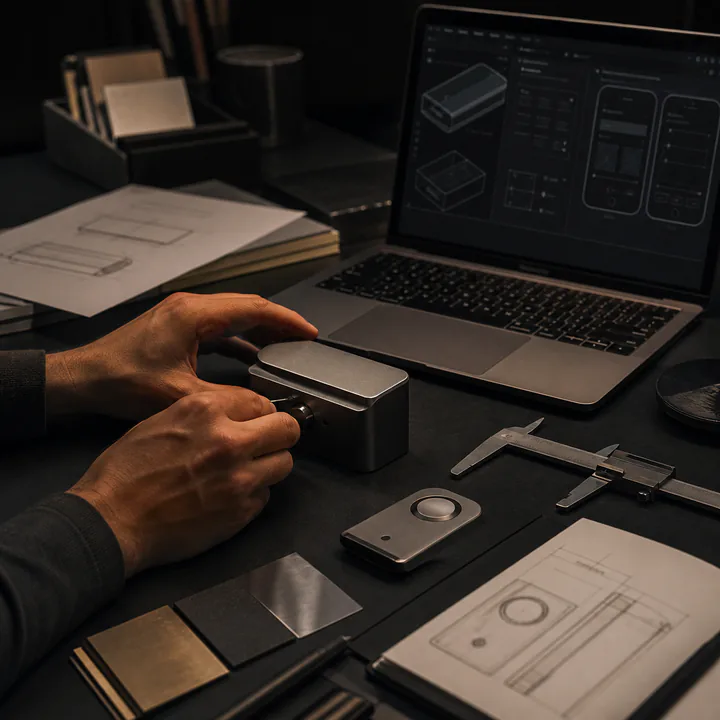
What we deliver
One product line from decision to release.
A focused product direction
User needs, product principles, hypotheses, priorities, success evidence, and a release boundary.
A coherent experience
Flows, prototypes, content, interface patterns, states, and accessibility decisions connected to the service behind them.
A production implementation
Working software, integrations, tests, deployment paths, documentation, and an explicit operating handoff.
Delivery path
Learn early. Ship the smallest complete experience.
01
Frame the product
Define the user, problem, business result, assumptions, constraints, and evidence required.
02
Prototype the behavior
Test the journey, interaction, service model, and technical risk before committing to a full build.
03
Design and engineer
Build the complete product slice, including interfaces, systems, integrations, data, tests, and controls.
04
Release and learn
Launch to an agreed audience, observe use and failure, and use the evidence to choose the next investment.
Start with the real constraint
Bring us the decision, workflow, or product that needs to move.
We will help you define the smallest useful starting point and the right engagement shape.
FAQ
Questions buyers ask before they start
Can you start from an existing product?
Yes. The first stage can inspect the current product, user evidence, architecture, roadmap, and delivery constraints before defining the priority change.
Do you provide both design and engineering?
Yes. Product strategy, UX and interface design, and full-stack engineering can remain in one delivery engagement.
How do product design and product engineering work together?
The disciplines share one product direction and release boundary. Design makes the user journey, information, interactions, and states explicit; engineering tests feasibility and builds the systems behind them. Keeping both connected reduces handoff loss and exposes tradeoffs before they become expensive rework.
Can you design an AI feature without rebuilding the whole product?
Often yes. The right boundary depends on the user journey, existing architecture, data, permissions, and how the feature should fail or escalate.
Do you build design systems?
Yes, when reusable interface patterns will improve the product and delivery. The scope can include tokens, components, content behavior, accessibility, documentation, and implementation, but it is shaped around the active product rather than treated as an isolated visual exercise.
What happens after the first release?
We can hand the product to your team with documented decisions and operating guidance, or continue as a partner for measured iteration and roadmap delivery.